Carrier System Leaking Water in Encino, CA
Straight talk: A Carrier system leaking water in Encino, CA is usually a clogged condensate drain, a failed pump, or a frozen coil overrunning the pan, not a refrigerant leak. Encino Carrier HVAC clears the drain and adds a float switch across 91316 and 91436, so call (213) 755-3565 or book online.
Service snapshot
- Water-leak diagnosis on Carrier systems across Encino (91316, 91436).
- Top causes: clogged condensate drain, failed condensate pump, open float switch, frozen coil.
- Applies to ducted air handlers and Carrier 37M crossover ductless heads.
- Drain clear and flush usually $150 - $400; pump replacement higher.
- We add a safety float switch to prevent water damage.
- Frozen-coil leaks traced to airflow or low charge first.
- Hours: Mon-Fri 7am-7pm, Sat 8am-4pm; emergency line after hours.
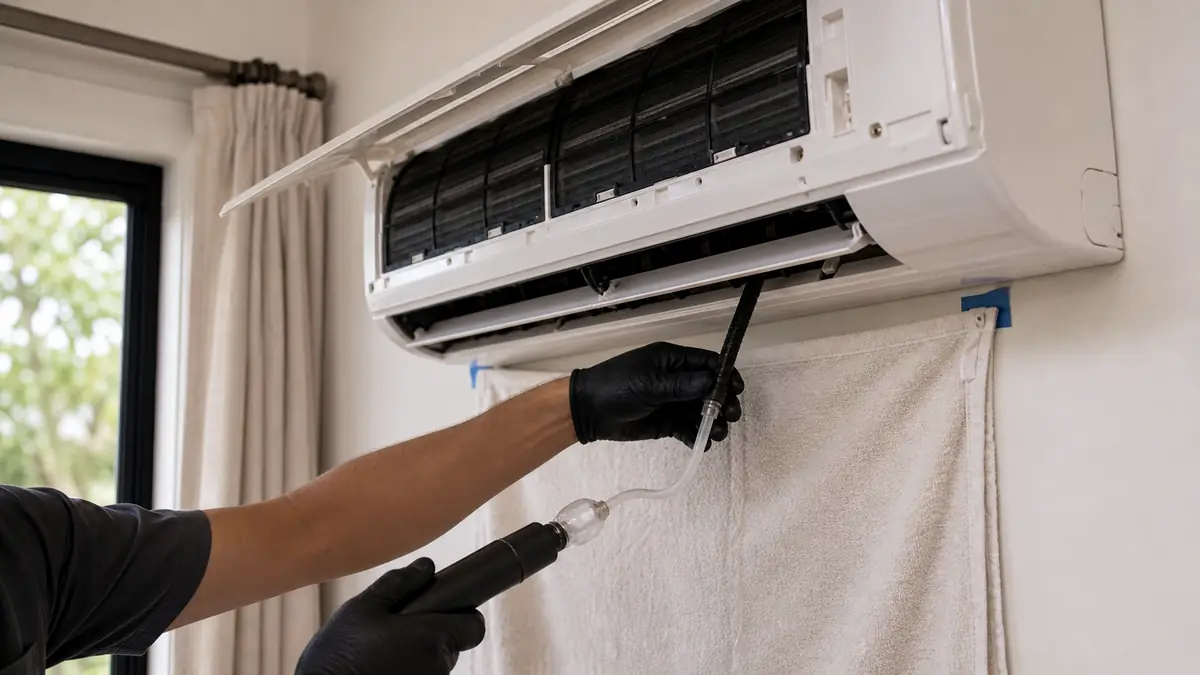
Why does a Carrier system leak water in Encino?
Cooling pulls humidity out of the air, and that condensate has to drain. The most common Encino leak is a clogged condensate line: algae and dust build a slimy plug, the pan backs up, and water finds the lowest path, often a hallway ceiling below an attic air handler. On a ductless Carrier 37M head, a clogged drain or a failed lift pump backs up at the wall unit. A frozen coil from low airflow or low charge is the sneaky cause: it melts faster than the pan can handle.
How do you find and fix the leak?
We trace the water to its source, clear and flush the condensate line, check the pan and the drain slope, test the pump if there is one, and verify the float switch. If the coil is iced, we fix the airflow or charge before declaring the drain healthy. The table maps the common findings to fixes.
| Symptom | Likely cause / first check | Cost lane |
|---|---|---|
| Drip from indoor unit, system still cools | Clogged condensate drain; clear and flush | $150 - $400 |
| Water at a ductless head | Clogged drain or failed lift pump | $200 - $700 |
| System shuts off, no water | Float switch tripped on backup | $150 - $400 |
| Ice on coil, then a flood when it melts | Low airflow or low charge; fix first | $225 - $1,500 |
What is the step-by-step leak diagnosis?
We trace water to its origin before assuming the drain. First we confirm whether the system is still cooling: a unit that shut itself off with a dry pan usually tripped its float switch, which points straight at a drain backup. Second we inspect the primary condensate pan and the secondary (emergency) pan under an attic air handler for standing water and rust staining. Third we test the drain by pouring water into the pan and watching it run; a slow or stalled drain confirms a clog, which we clear with CO2 or a wet/dry vacuum at the exterior termination, then flush and verify slope. Fourth, if the equipment has a condensate pump or a ductless lift pump on a Carrier 37M head, we power it and confirm it lifts and shuts off on its own float. Last we check the coil for ice, because a frozen coil that melts faster than the pan can drain masquerades as a simple clog.
What can I do myself versus call a pro?
Safe homeowner steps: switch the system off at the thermostat the moment you see water or ice, place a towel or pan to catch drips, and check that the exterior condensate termination is not capped by dirt or a wasp nest. Clearing standing water from a visible primary pan with a wet/dry vacuum is fine. What needs a tech: opening the air handler, handling a failed pump on line voltage, accessing a ductless head on a wall, and anything involving the refrigerant circuit when the coil is frozen. Running a system that is actively leaking onto drywall or an attic ceiling risks a far larger repair than the drain itself.
How do I prevent the next leak?
Two things prevent most repeat leaks: a seasonal condensate flush as part of maintenance, and a safety float switch that shuts the system off on a backup before water reaches drywall. In Encino's humid heat spells the drain works hardest, so a spring service catches a marginal pump or a half-clogged line before it floods. If the root cause is a frozen coil, see our weak-airflow page.
Common questions about a Carrier water leak in Encino
Why is water dripping from my indoor unit during a heat wave?
On a humid 95 F Encino afternoon the coil pulls a lot of condensate, and if the drain is clogged the pan overflows. A slimy algae clog in the drain line is the most common cause. We clear and flush the line, check the slope, and add a safety float switch so the next clog shuts the system off instead of flooding.
Does a Carrier mini-split leak differently than a ducted system?
Yes. A ductless head, such as a Carrier 37M crossover, drains through a small condensate line, sometimes with a built-in pump. A clog or a failed pump backs up at the head and drips down the wall. A ducted system leaks at the air-handler pan instead. We diagnose the right drain path for your equipment.
Could the water actually be a refrigerant problem?
Indirectly. A low charge or restricted airflow freezes the coil; when it thaws, the melt overruns the pan and looks like a leak. If we find ice on the coil, we fix the airflow or charge first, then verify the drain, rather than just mopping up the water.
Is a float switch worth adding?
For most Encino homes, yes. A condensate float (safety) switch costs little and shuts the system down on a drain backup before water reaches drywall, flooring, or an attic ceiling. It is cheap insurance against a far more expensive water-damage repair.
My system shut off and there is no water. Is the leak fixed?
Not necessarily; the float switch likely did its job. When the drain backs up, the safety float opens the 24-volt cooling circuit and stops the system before the pan overflows, so you see no water but also no cooling. That is the switch protecting your ceiling. We still need to clear the actual clog or pump fault, because the system will keep tripping until the drain runs freely again.
Can I pour bleach down the drain line to clear it myself?
A cup of distilled white vinegar down the access tee a couple of times a season is the safer DIY maintenance step; bleach can corrode metal pan fittings and is harsh in an attic. Vinegar will not clear a fully formed clog, though. A real plug needs the line blown or vacuumed clear, the pan checked, and the slope verified, which is part of a proper service.